
Photo by Ashton Clark on Unsplash
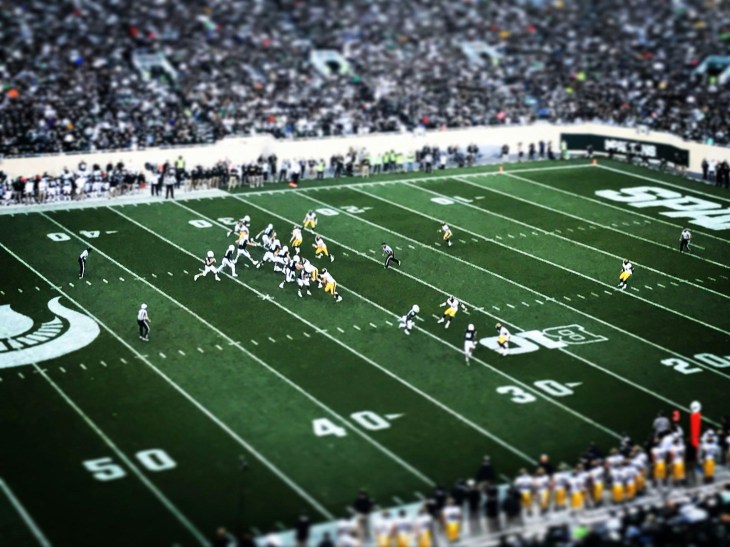
The last four Super Bowls have delivered remarkably different victories. Seattle overwhelmed New England with defense in February 2026, Philadelphia punished Kansas City a year earlier, and the Chiefs won consecutive championships through two tense finishes.
Those outcomes offer a useful way to assess the race for Super Bowl LXI. Talent matters, but recent winners have also shown how much adaptability, defensive execution, and composure count when an entire season comes down to a handful of possessions.
Seattle and Philadelphia Made Defense Count
Seattle’s 29–13 victory over New England in Super Bowl LX wasn’t an offensive showcase. The Seahawks kept the Patriots scoreless through three quarters, recorded six sacks, and forced three turnovers, turning defensive disruption into control of the game.
Running back Kenneth Walker III provided offensive balance, rushing for 135 yards and earning the game’s MVP award. His production meant Seattle didn’t need its passing attack to carry every possession, particularly while the defense was keeping New England under pressure.
Philadelphia’s 40–22 victory over Kansas City in February 2025 followed a similar defensive principle, although the Eagles produced a more explosive scoreboard. Their defense sacked Patrick Mahomes six times and forced three turnovers, contributing directly to a lead that reached 34–0.
The Eagles also capitalized on those opportunities quickly. Cooper DeJean returned an interception for a touchdown, and Philadelphia’s offense made it increasingly difficult for Kansas City to recover.
Neither championship depended solely on preventing points. Seattle paired its defense with dependable rushing, while Philadelphia combined defensive takeaways with an offense capable of turning opportunities into a commanding lead.
Kansas City Thrived in Tight Finishes
The Chiefs’ two earlier titles reveal a different route to the same destination. Kansas City beat Philadelphia 38–35 in Super Bowl LVII in February 2023, then edged San Francisco 25–22 in overtime the following year.
Those games required different responses from Patrick Mahomes and his teammates. The Eagles pushed Kansas City into a high-scoring contest, while the 49ers demanded patience through a game in which points were harder to find.
Against San Francisco, the Chiefs needed a late drive to force overtime and another possession to win. Mahomes ultimately found Mecole Hardman for the winning touchdown, completing a comeback that depended on several decisive plays rather than sustained dominance.
That ability to operate under pressure remains one of the hardest qualities to measure before the playoffs. Regular-season numbers reveal how consistently an offense moves the ball, but not necessarily how a quarterback will respond with the championship at stake.
Kansas City’s experience also highlights the value of coaching flexibility. Plans rarely survive every defensive adjustment, and championship teams must find another approach without abandoning their discipline.
What the Champions Have in Common
Seattle, Philadelphia, and Kansas City didn’t win with identical formulas. Their common advantage was the ability to dictate important stretches of a game and respond when their preferred approach met resistance.
That distinction matters when discussing potential Super Bowl champions for the 2026 season. While championship odds offer one perspective on the race, recent winners show why impressive records and explosive offenses aren’t enough on their own.
Effective defenses make opponents work for every yard. Pressure that arrives without exposing the secondary can disrupt passing rhythm, while reliable tackling prevents ordinary completions from becoming game-changing gains.
Offensive versatility offers an answer when a defense takes away the obvious weapon. Seattle leaned on Walker’s rushing, Philadelphia found points in multiple ways, and Kansas City repeatedly adapted to the circumstances of close games.
Contenders also need the discipline to avoid compounding mistakes. Turnovers, penalties, and poor clock decisions become particularly costly when postseason opponents offer fewer easy opportunities.
These qualities aren’t a checklist guaranteeing a trophy. They provide a more useful test than simply asking which roster has the most recognizable names.
Which Contenders Match That Profile?
By early November, San Francisco and Buffalo had built 6–1 records, while Minnesota stood at 6–1 and Chicago at 6–2. Kansas City remained firmly in the AFC conversation at 5–2. Those results provide a useful starting point, although a strong first half of the season doesn’t guarantee a successful playoff run.
San Francisco’s case rests on whether its offense can remain flexible while the defense handles difficult matchups. A successful regular season would mean less if injuries or protection problems leave the team unable to adjust in January.
Buffalo offers another interesting comparison to Kansas City’s previous championship runs. Quarterback play can keep a team competitive in high-pressure situations, but reliable protection and defensive stops still matter when a close game turns on one possession.
Kansas City brings experience of those moments, yet past titles don’t solve present problems. The Chiefs still need enough consistency across the roster to avoid relying on late-game improvisation every week.
Baltimore’s 4–4 start has left the Ravens with work to do, despite the offensive variety and physical challenges they can present. Their championship case will strengthen if they find greater consistency and carry that approach into games against disciplined defenses.
Chicago and Minnesota have made stronger early cases in the NFC. The Bears entered November at 6–2 after defeating Seattle, while the Vikings held a 6–1 record. Both teams still have to prove they can sustain that form, but their results deserve attention when comparing the conference’s leading contenders.
The Rams and defending champion Seahawks entered November at 4–4, leaving both with ground to make up in the NFC West. Seattle has recent experience winning through defensive pressure, but its 34–17 loss to Chicago on November 2 showed that last season’s success doesn’t guarantee the same results. Los Angeles faces a similar challenge of turning individual victories into a more consistent campaign.
The remaining schedule will reveal how well these contenders perform against tougher opposition. Each matchup presents different challenges, from quarterback protection to defensive pressure, which are also explored in FanDuel’s NFL matchup predictions.
What Could Shift the Race?
Injuries can change championship prospects faster than any single result. Losing a key offensive lineman, pass rusher, or quarterback alters not only a team’s talent level but also which strategies remain practical.
Playoff positioning introduces another challenge. Division races and conference records influence the route through January, and a difficult sequence of road games can expose weaknesses hidden during comfortable home victories.
Timing matters as well. A team that looks uneven in October may become more dangerous if its younger players develop, injured starters return, or coaches find better ways to distribute responsibilities.
The opposite can happen to early favorites. Opponents collect film, familiar plays become easier to anticipate, and a once-reliable approach may require serious adjustment.
Recent champions weren’t rewarded for matching a particular statistical profile in the fall. They delivered when postseason opponents forced them to solve unfamiliar problems.
The Real Championship Test Comes Later
Seattle demonstrated the force of an organized defense, Philadelphia showed how quickly pressure can turn into points, and Kansas City proved the value of executing in close finishes. Together, those champions offer several paths toward the same prize.
The 2026–27 title race will ultimately turn on which contenders retain enough health, flexibility, and composure to follow one of those paths. October can identify serious candidates, but February decides whose strengths were built to last.
Content reflects information available as of 2026/11/04; subject to change.

